
Stun guns and pepper spray serve as crucial self-defense tools, differing in mechanism and effectiveness. Stun guns, with their high-voltage electrical pulses, offer immediate immobilization through muscular spasms, making them faster and more reliable in close-quarters combat. Pepper spray, using capsaicin to irritate sensory systems, causes temporary blindness and coughing but may be less consistent due to environmental factors. In real-world applications, stun guns have a higher success rate in subduing attackers within seconds compared to pepper spray's slower effects. However, the use of stun guns is heavily regulated, while pepper spray remains popular for its quick-acting properties. Choosing between them requires understanding local laws and individual circumstances for optimal safety.
“Uncover the ultimate self-defense tool in our comprehensive review of high-output stun guns. We explore the nuances between stun guns and pepper spray, focusing on maximum voltage output and real-world effectiveness. From power analysis to practical applications, this guide offers insights into which tool excels in various scenarios. Additionally, we delve into safety measures, legal considerations, and essential factors for responsible ownership, ensuring you’re prepared with the right knowledge for self-defense.”
- Stun Guns and Pepper Spray: Understanding the Differences
- Maximum Voltage Output: A Closer Look at Stun Gun Power
- Effectiveness in Real-World Scenarios: Stun Gun vs Pepper Spray
- Safety, Legalities, and Considerations for Self-Defense Tools
Stun Guns and Pepper Spray: Understanding the Differences

Stun guns and pepper spray are both self-defense tools, but they work differently and have distinct effects. When considering which one to choose, understanding their unique properties is crucial. The stun gun delivers an electric shock that temporarily disables a target, causing muscle spasms and disorientation. This makes it an effective option for neutralizing attackers without necessarily causing permanent harm. On the other hand, pepper spray irritates the eyes, nose, and throat, leading to temporary blindness and difficulty breathing. While both options have their merits, the stun gun’s widespread disruption of muscular control often translates to a quicker incapacitation compared to the delayed onset of effects from pepper spray.
In terms of effectiveness, debates arise when comparing a stun gun vs pepper spray. However, research suggests that in real-world scenarios, stun guns tend to have a higher success rate in swiftly disabling assailants, especially in close-quarters combat. Pepper spray, while powerful, may not always be effective due to variables like distance, wind, and the target’s resilience. Thus, for personal safety, many individuals opt for stun guns as their primary self-defense mechanism, prioritizing the immediate impact and reliability of electric shock over the potentially less predictable outcomes of pepper spray.
Maximum Voltage Output: A Closer Look at Stun Gun Power

The maximum voltage output of a stun gun is a critical factor in determining its effectiveness as a personal defense tool, often compared to the efficacy of pepper spray. While both offer protection, understanding the power behind each can help users make informed choices. Stun guns utilize high-voltage electrical pulses to disrupt muscle control, rendering the target immobilized for several minutes. This immediate incapacitation makes stun guns particularly appealing for self-defense scenarios where speed and precision are paramount.
In contrast, pepper spray relies on capsaicin, a chemical compound derived from chili peppers, to irritate the eyes, nose, and respiratory system, causing temporary blindness and coughing fits. While pepper spray has been long-established as a non-lethal force option, stun guns offer a potentially more powerful and immediate response. The voltage output, measured in thousands of volts, ensures that a stun gun can deliver a significant electric shock, making it an effective deterrent against potential assailants.
Effectiveness in Real-World Scenarios: Stun Gun vs Pepper Spray
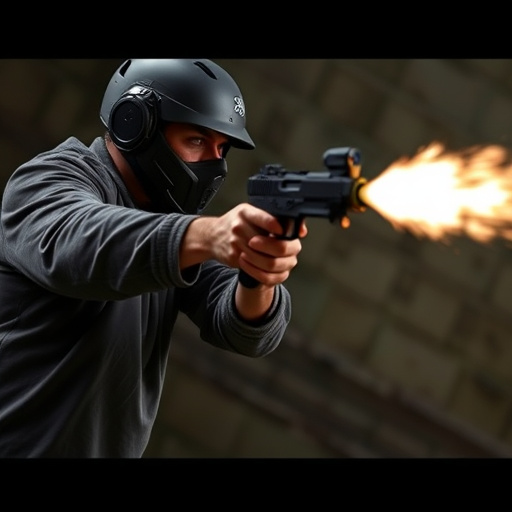
When comparing a stun gun to pepper spray, understanding their effectiveness in real-world scenarios is crucial. Stun guns are designed to incapacitate an attacker through electric shock, rendering them temporarily unconscious for several minutes. This makes them particularly useful in close-quarters encounters where speed and immediate disorientation are key. On the other hand, pepper spray relies on irritants to cause pain and temporary blindness, making it more effective at a distance. While both can be powerful tools for self-defense, stun guns often excel in direct, up-close interactions, providing users with a faster response time and reduced risk of cross-contamination from spray residue.
In terms of Stun Gun Vs Pepper Spray Effectiveness, studies show that stun guns have a higher success rate in subduing an attacker within the first few seconds of deployment. This is because the electric current directly affects the body’s nervous system, disrupting muscle control and balance. In contrast, pepper spray takes time for its effects to kick in, allowing the assailant to maintain their grip or escape before the target becomes incapacitated. Therefore, for those seeking a swift and reliable means of self-defense during face-to-face confrontations, stun guns often prove more effective than pepper spray.
Safety, Legalities, and Considerations for Self-Defense Tools

When considering self-defense tools, it’s crucial to balance effectiveness with safety and legal considerations. A stun gun, known for its high voltage output, offers a non-lethal option that can immobilize an assailant. However, in many regions, there are strict regulations governing their use and carrying. It’s essential to understand local laws to ensure compliance, as possession without a permit or training can result in severe penalties.
Compared to pepper spray, stun guns have a distinct advantage in terms of range and control. While pepper spray requires close contact for maximum effectiveness, a stun gun can be deployed from a distance, providing the user with an extra layer of protection. However, pepper spray still remains a viable option due to its fast-acting properties, especially in situations where the user might not have time or space to deploy a stun gun effectively.
In evaluating stun guns and their maximum voltage output, it’s clear that these devices offer a unique advantage in self-defense compared to pepper spray. The ability to disrupt an assailant’s motor functions with a powerful electric discharge makes stun guns highly effective in real-world scenarios. However, the Stun Gun vs Pepper Spray effectiveness debate highlights crucial considerations regarding safety and legality, emphasizing the importance of informed choices for personal protection. Understanding these tools’ distinct strengths and limitations is essential for individuals looking to empower themselves and ensure their well-being in potentially dangerous situations.