
This text compares stun guns and pepper spray as self-defense tools, highlighting their effectiveness and unique features. Stun guns, with voltages ranging from 50,000 to 150,000 volts, offer faster and more reliable incapacitation at longer ranges, especially against resistant assailants, while pepper spray uses capsaicin to induce pain and temporary blindness without causing permanent harm. Both have distinct advantages; stun guns are perceived as more powerful but pepper spray's quick effect wear-off makes it suitable for de-escalation. Understanding these differences is crucial for individuals to choose based on their personal safety needs. (SEO Keywords: Stun Gun Vs Pepper Spray Effectiveness)
“Unraveling the safety aspects of personal defense tools, this article delves into the critical specifications of stun guns. From understanding voltage ranges to comparing their effectiveness against pepper spray, we guide you through essential safety features.
Stun Guns vs Pepper Spray: Effectiveness and Safety offer a comprehensive insight, ensuring individuals make informed choices for self-defense. Discover how these tools differ, and gain knowledge that empowers you to stay secure.”
- Stun Gun Voltage Range: Understanding the Safety Specifications
- Stun Guns vs Pepper Spray: Comparing Effectiveness and Safety Features
Stun Gun Voltage Range: Understanding the Safety Specifications

Stun guns, as a non-lethal self-defense tool, operate on a specific voltage range that determines their effectiveness and safety. Understanding this range is crucial when comparing stun guns to other personal defense options like pepper spray. The typical stun gun voltage ranges from 50,000 to 150,000 volts, with some models even exceeding this range. This high voltage is designed to temporarily incapacitate an assailant by causing muscle spasms and disorientation.
When considering stun gun vs pepper spray effectiveness, voltage plays a significant role. Pepper spray uses capsaicin, a chemical that irritates the eyes and respiratory system, while stun guns rely on electrical impulses. The stun gun’s higher voltage range can provide faster and more reliable incapacitation, especially in situations where physical resistance is present. However, it’s important to note that proper usage techniques and training are essential for both methods to ensure safety and maximum effectiveness.
Stun Guns vs Pepper Spray: Comparing Effectiveness and Safety Features
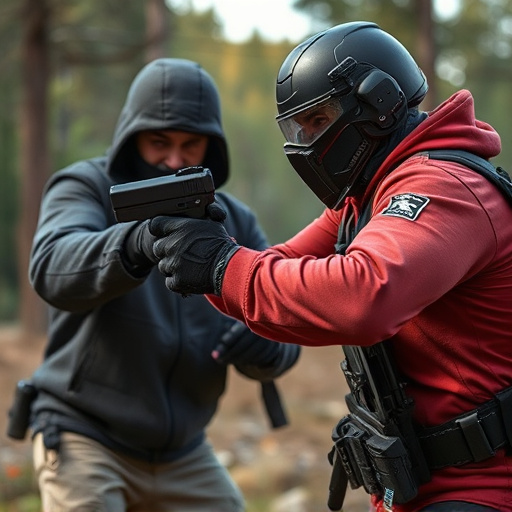
When it comes to personal safety, stun guns and pepper spray are two common self-defense tools often compared for their effectiveness and ease of use. However, understanding their distinct features is crucial before making a choice that aligns with your needs. In terms of Stun Gun Vs Pepper Spray Effectiveness, these devices operate on different principles. Stun guns deliver an electric shock, temporarily incapacitating the target, while pepper spray irritates the eyes, nose, and throat, causing the assailant to become disoriented and flee.
Safety is a significant consideration. Stun guns typically offer a higher voltage range (often 50,000–120,000 volts) that can knock an attacker down and disrupt their motor functions. On the other hand, pepper spray uses capsaicin, a chemical compound found in chili peppers, to cause pain and temporary blindness. Stun guns are generally seen as more powerful and effective at longer ranges, making them appealing for personal safety. However, pepper spray has its advantages too; it’s non-lethal, and its effects wear off quickly, allowing the user to regain control faster.
When considering self-defense options, understanding the safety specifications of stun guns versus pepper spray is key. Both have distinct advantages in terms of Stun Gun Vs Pepper Spray effectiveness, but each comes with its own set of considerations. Stun guns utilize high voltage to incapacitate an attacker, while pepper spray irritates the eyes and respiratory system. Knowing the appropriate voltage range for stun guns and the safety features that differentiate them from pepper spray can help individuals make informed decisions to protect themselves in various situations.